
‘Venous Leg Ulcer’ is the medical term for an open wound on the lower leg caused by a chronic venous disease. It is defined as stage 5 (healed Venous Leg Ulcer) and stage 6 (active Venous Leg Ulcer) according to an internationally accepted standard for describing patients with chronic venous disease (CEAP classification system).

What is a Venous Leg Ulcer?

What causes a Venous Leg Ulcer?
A Venous Leg Ulcer is the most severe stage of chronic venous insufficiency. Patients with chronic venous insufficiency have non-working vein valves that cause a pooling of venous blood in the legs. The increased pressure and fluid accumulation (swelling) also compromise the supply of oxygen and nutrients to the skin and underlying tissue and activate an inflammatory response.
Although Venous Leg Ulcers can occur in everyone with non-treated or inadequately treated chronic venous insufficiency, the following conditions increase the risk for developing Venous Leg Ulcers:
- Older age
- Smoking
- Obesity
- Previous injuries, such as broken bones, or surgery to the leg
- Varicose veins or deep vein thrombosis
- Immobility or low physical activity
Ulcers can also be caused by other conditions, such as impaired arterial blood flow, diabetes, autoimmune diseases, traumatic injuries, or tumors.
Symptoms of a Venous Leg Ulcer
A Venous Leg Ulcer can present as follows:
- Open wound that mainly occurs below the knee, especially around the inner ankle
- Swelling, cramping, heaviness and general discomfort in the legs or ankles
- Reddish, dry and itchy skin
- Discolored skin (red, purple, brown) that may feel slightly hard around the ulcer
- In the event of infection: increased pain, unpleasant odor, discharge emitting from the ulcer, redness and swelling in the affected area
Venous Leg Ulcers require specialized care, including regular wound dressing changes. Many patients also suffer from recurrent Venous Leg Ulcers. All this can significantly impact the quality of life. Therefore, immediate treatment is essential.

How to treat a Venous Leg Ulcer
Compression therapy is a very important part of treating a Venous Leg Ulcer and should be applied in combination with appropriate wound care products. Hydrofera Blue® and Cutimed® provide wound care products that face the challenges of VLUs, such as infection control and exudate management.
For Venous Leg Ulcers (VLUs), preparing the wound bed is essential at the beginning of treatment because it creates the conditions needed for the wound to heal and allows additional treatments, especially compression therapy, to be more effective. With Hydrofera Blue CLASSIC® antibacterial foam dressings, the result is a multifaceted, non-cytotoxic healing environment that reduces bioburden and aids in removing devitalized tissue from the wound bed.
VLUs often produce large amounts of drainage due to increased pressure in the leg veins. When excess exudate sits on the skin, it can cause maceration. Wound healing environments must not be too wet or too dry; finding optimal moisture balance is key. Cutimed® Sorbion® superabsorbent dressings feature outstanding absorption capacity, excellent exudate retention performance, and a cleansing effect to promote moist wound healing.
Clinical evidence
Compression bandages or stockings versus no compression for treating venous leg ulcers1
Patient population

1.391 patients with venous leg ulcers

Duration of venous leg ulcer: 9.0 weeks to 31.6 month

Size of venous leg ulcer: 5 - 20 cm2

How to prevent a Venous Leg Ulcer
Preventing a Venous Leg Ulcer requires appropriate treatment of the underlying condition, chronic venous insufficiency. There are several ways to help prevent developing a Venous Leg Ulcer:
- Wearing compression stockings
- Maintaining a healthy weight
- Exercising regularly
- Elevating your leg when possible
- Stop smoking
Discover our compression stockings for Venous Leg Ulcers
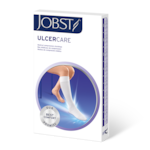
Compression for Maternity & Specific Medical Use
JOBST® UlcerCare Liner
JOBST UlcerCARE Liner is a ready-to-wear silk liner designed for easier donning of the outer stocking and keeping wound dressings securely in place.
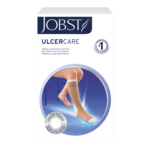
Compression for Maternity & Specific Medical Use
JOBST® UlcerCare | 2 Part System
JOBST UlcerCare is a 2-in-1 compression system designed to effectively manage venous leg ulcers. The two-part system provides graduated compression with a nominal compression of 40 mmHg at the ankle to help manage pain and discomfort.
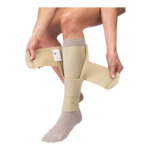
Compression for Maternity & Specific Medical Use
JOBST® FarrowWrap® 4000
The JOBST FarrowWrap 4000 leg piece is designed to provide gradient compression to the leg to sustain edema reduction, prevent new swelling and promote healing of leg ulcers caused by chronic venous diseases.
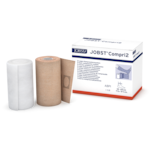
Compression for Maternity & Specific Medical Use
JOBST® Compri2 | Bandage
JOBST Compri2 two-layer compression bandage system provides consistent compression to the affected limb. The multilayer system can be used to treat venous leg ulcers, venous edema and lymphedema.


